
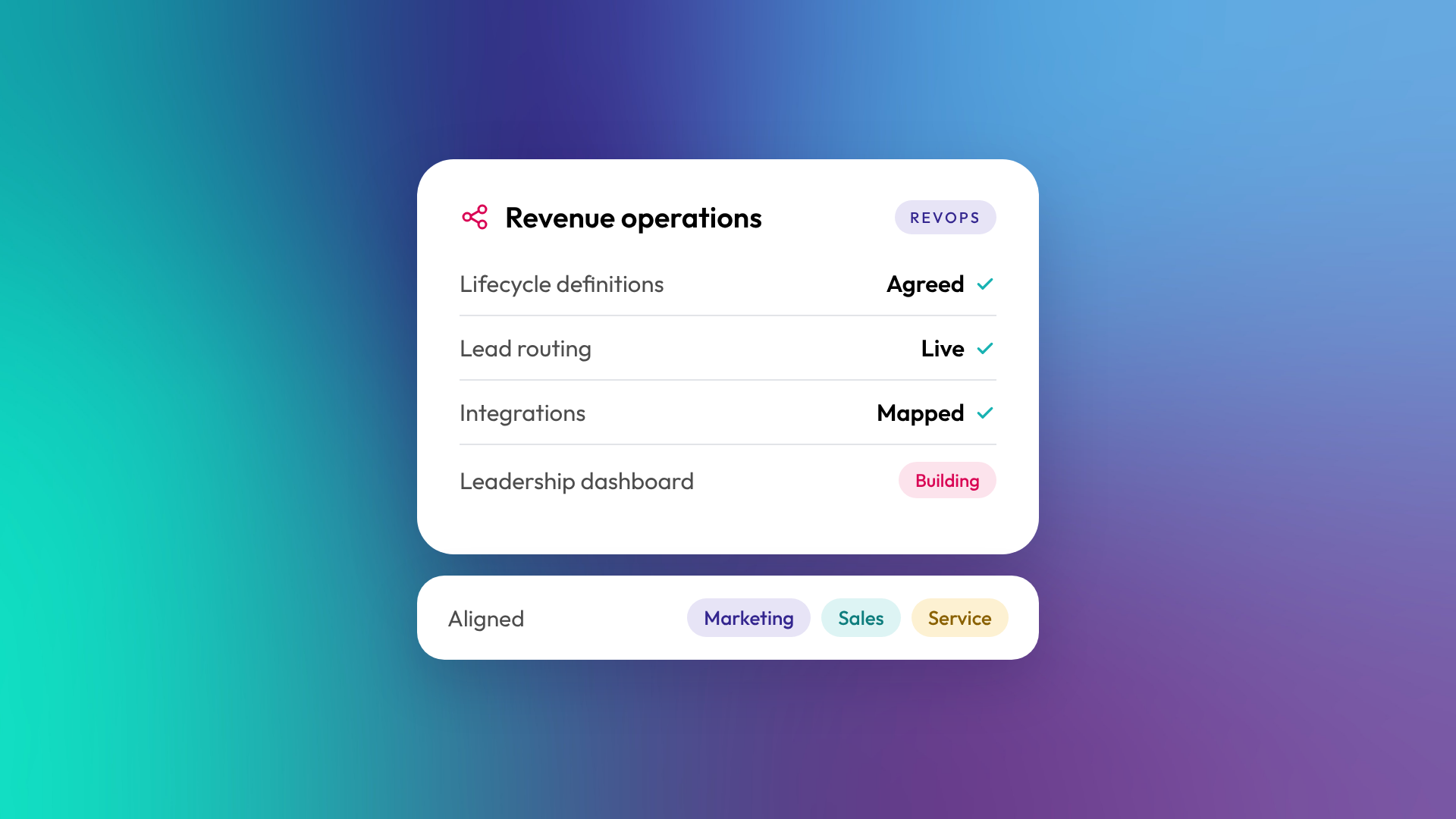
RevOps (revenue operations) is the function that aligns the systems, data and processes behind marketing, sales and customer service, so the whole customer journey runs as one connected process. Instead of each team running its own tools, definitions and reports, RevOps gives them one CRM, one set of definitions and one version of the numbers. For a growing B2B business, RevOps is often less a department and more a way of running the CRM.
What does RevOps actually do?
RevOps owns the operational layer that sits underneath revenue teams. It decides how data is structured, how leads move between teams, which tools connect to the CRM, and how performance is reported. The goal is that a lead, a deal and a customer are handled consistently from first enquiry through to renewal.
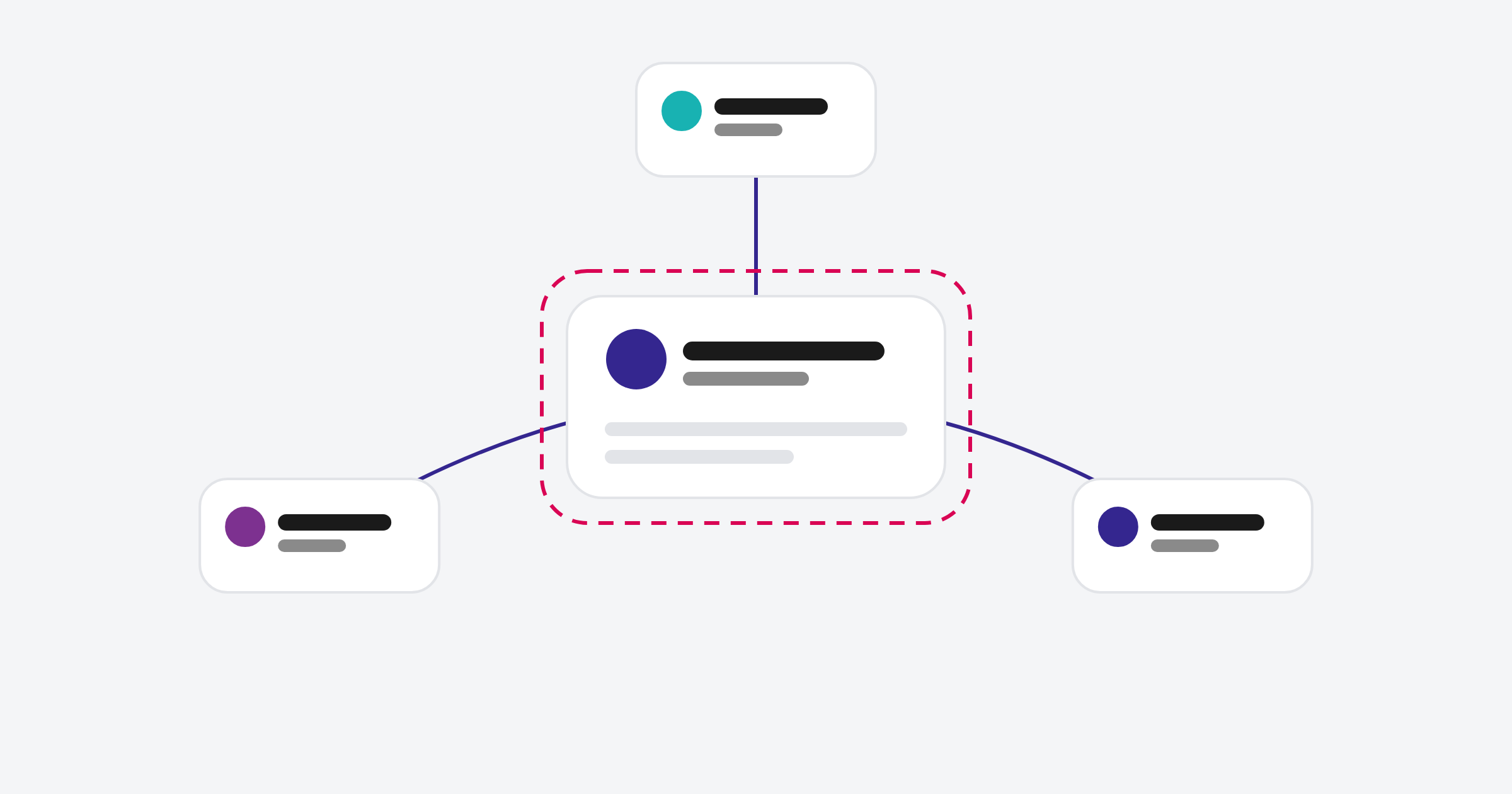
Typical RevOps responsibilities:
- CRM administration and data quality
- Lifecycle stage and pipeline definitions
- Lead routing and handoffs between marketing, sales and service
- Integrations between the CRM and other systems
- Reporting and dashboards for leadership
- Tool selection and licence management
- Process documentation and training
How is RevOps different from sales ops or marketing ops?
Sales ops and marketing ops each support one team. RevOps supports all of them together, which avoids the common problem of each team optimising its own numbers at the expense of the overall journey.
| Marketing ops | Sales ops | RevOps | |
|---|---|---|---|
| Supports | Marketing | Sales | Marketing, sales and service |
| Focus | Campaigns, automation, lead generation | Pipeline, territories, forecasting | The full customer journey |
| Owns data definitions | For marketing | For sales | For everyone |
| Typical risk | Optimises MQL volume | Optimises closed deals only | Needs authority across teams |
Why does RevOps matter for growing B2B businesses?
Growing businesses tend to add tools and people faster than they add structure. Marketing buys an email tool, sales buys a CRM, service runs on a shared inbox, and finance has its own system. Before long, nobody agrees on the numbers. RevOps fixes that by putting one connected system and one set of definitions underneath the teams.
The signs a business needs RevOps thinking:
- Marketing and sales report different numbers for the same thing
- Leads get lost between teams
- Leadership can't get a reliable pipeline or revenue report
- Several tools hold overlapping customer data
- Nobody owns the CRM
Do you need a RevOps team?
Not necessarily. Smaller businesses often get most of the benefit from one capable CRM owner and a clear set of rules, sometimes supported by an outside partner. A dedicated RevOps team becomes worthwhile when there are several revenue teams, complex integrations, or a volume of data and reporting that needs full-time attention.
How does HubSpot support RevOps?
HubSpot is well suited to RevOps because marketing, sales, service and revenue tools share one CRM. That removes much of the integration work RevOps teams spend time on with stitched-together systems. Data Hub adds data sync, data quality tools and custom code automation, and reporting can combine data from every hub.
The platform still needs designing. Lifecycle stages, pipelines, properties and automation all need to be set up around how your business works.
Where should a business start with RevOps?
Start with definitions and data, not tools. Agree what each lifecycle stage means, how leads move between teams, and which three or four reports leadership needs. Then make the CRM reflect those decisions and clean up the data underneath. New tools and automation come after the foundation is solid.
Related reading: What is CRM implementation, and what does it involve? and What is attribution reporting?.
Common questions about RevOps
What does RevOps stand for?
RevOps stands for revenue operations.
Is RevOps just CRM administration?
CRM administration is a large part of it, but RevOps also covers process design, data definitions, reporting and alignment between teams.
Who should RevOps report to?
Often to the CEO, COO or chief revenue officer, so it has authority across marketing, sales and service rather than sitting inside one team.
Can a HubSpot partner do RevOps?
Yes. Many businesses use a HubSpot partner for RevOps work such as data clean-up, automation, integrations and reporting, either as a project or ongoing support.
What skills does RevOps need?
A mix of CRM technical skills, process thinking, data and reporting ability, and enough commercial understanding to talk to sales, marketing and leadership.
Where to from here
Ask marketing, sales and leadership how many leads you had last month. If you get three different answers, that's a RevOps problem worth fixing first. Our optimisation and support team does exactly this kind of work in HubSpot.
