An MQL (marketing qualified lead) is a lead that marketing judges ready for a sales conversation, based on agreed criteria like fit and engagement. An SQL (sales qualified lead) is a lead that sales has reviewed and accepted as a genuine prospect worth pursuing. Marketing decides who becomes an MQL. Sales decides who becomes an SQL. The handoff between the two is where many B2B pipelines leak.
What is a marketing qualified lead (MQL)?
An MQL is a lead that meets the criteria marketing and sales have agreed signal readiness for sales contact. Those criteria usually combine fit (right industry, size and role) with engagement (meaningful actions like a demo request or pricing page visit). In HubSpot, Marketing qualified lead is one of the default lifecycle stages.
Typical MQL triggers in B2B:
- A demo or consultation request
- A lead score above an agreed threshold
- A good-fit contact engaging with high-intent content, such as pricing or case studies
- A webinar attendee from a target account who asked a question
What is a sales qualified lead (SQL)?
An SQL is a lead that sales has spoken to or reviewed and confirmed as a real opportunity, with a genuine need, the right person involved and a realistic timeframe. In HubSpot, Sales qualified lead is the lifecycle stage after MQL. Many businesses move contacts to SQL when a salesperson accepts the lead, and to Opportunity when a deal is created.
What's the difference between an MQL and an SQL?
The difference is who has judged the lead, and on what evidence. An MQL is qualified on data and behaviour. An SQL is qualified by a human from sales, usually after a conversation.
| MQL | SQL | |
|---|---|---|
| Who decides | Marketing, often automatically | Sales, after review or a conversation |
| Based on | Fit and engagement data | Confirmed need, authority and timing |
| Next step | Hand to sales for follow-up | Create a deal or opportunity |
| HubSpot lifecycle stage | Marketing qualified lead | Sales qualified lead |
| Common metric | MQLs per month, MQL to SQL conversion | SQL to opportunity and win rates |
Who should define MQL and SQL criteria?
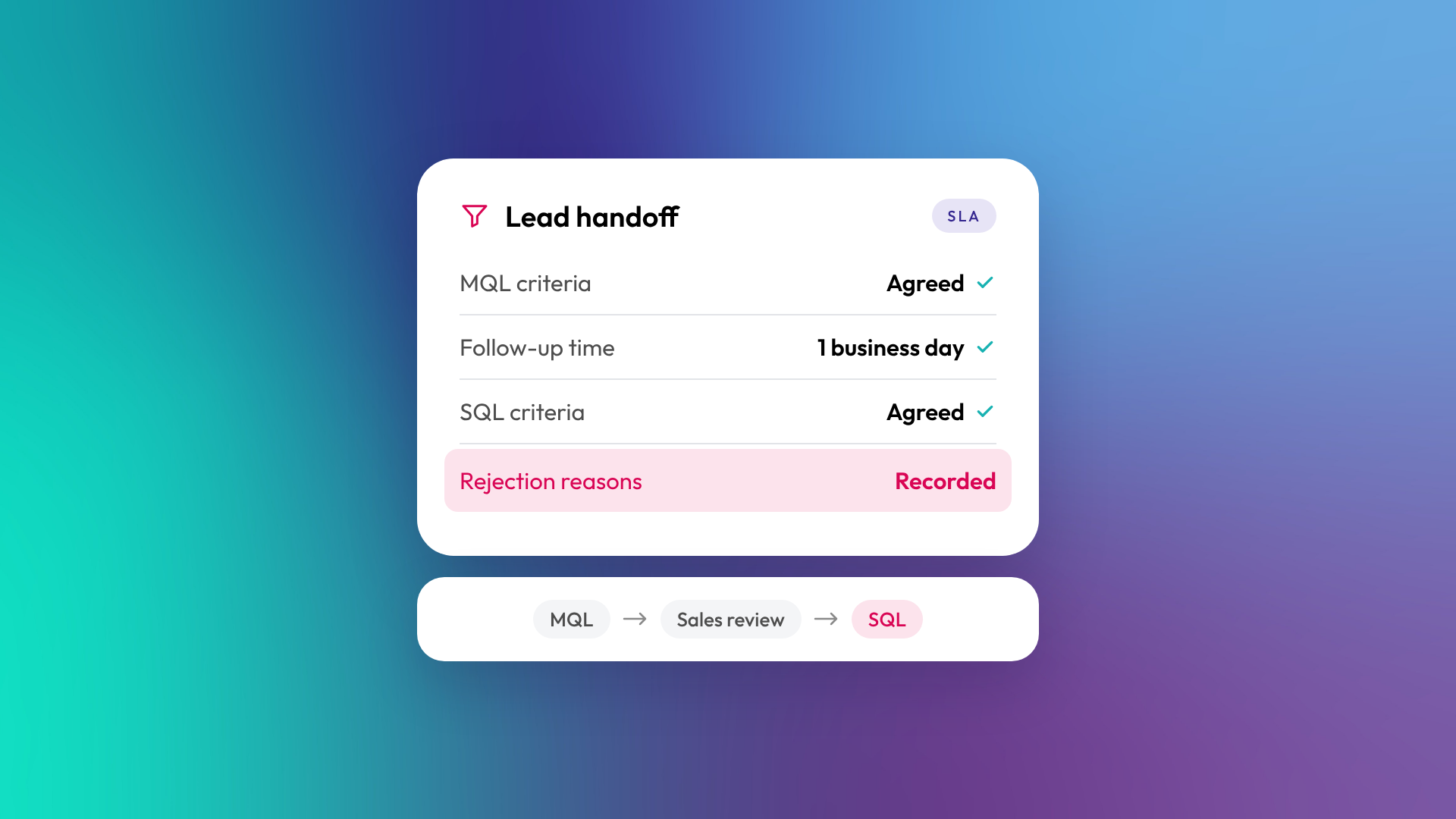
Marketing and sales should define both together, in writing. If marketing defines MQLs alone, sales will ignore them. If sales defines SQLs without telling marketing why leads are rejected, marketing can't improve. A short service level agreement (SLA) covering criteria, follow-up times and rejection reasons fixes most of this.
A simple SLA covers:
- The exact criteria for an MQL
- How quickly sales will follow up an MQL
- The criteria for accepting a lead as an SQL
- What happens to rejected leads, and the reasons sales must record
- How often both teams review the numbers
What is a good MQL to SQL conversion rate?
There's no universal benchmark worth relying on, because definitions vary so much between businesses. A better test is trend and consistency: if your conversion rate drops, either lead quality has fallen or sales isn't following up. Track it monthly against your own history rather than an industry average.
How do you set up MQL and SQL in HubSpot?
In HubSpot, MQL and SQL are lifecycle stages, so you set them with workflows tied to agreed criteria. A lead score passing a threshold, or a demo form submission, can set the lifecycle stage to MQL and notify the owner. When sales accepts the lead, the lifecycle stage is set to SQL, by hand or with a workflow. Moving a lead through the lead pipeline or changing lead status doesn't change lifecycle stage on its own. Lead status (or the lead object) then tracks follow-up activity. Read more: Lifecycle stage vs lead status: what's the difference?
Common mistakes to avoid:
- Letting anyone change lifecycle stage by hand
- Counting every form fill as an MQL
- Skipping SQL entirely, so you can't see where leads drop off
- Never recording why sales rejected a lead
Related reading: What is RevOps? A plain-English definition.
Common questions about MQLs and SQLs
Is an SQL the same as an opportunity?
Not usually. An SQL is an accepted lead. An opportunity normally means a deal has been created with a value and expected close date. In HubSpot these are separate lifecycle stages.
Can a lead skip MQL and go straight to SQL?
Yes. A lead referred directly to sales, or a demo request handled immediately, may skip MQL. Just make sure reporting accounts for it.
What's a SAL?
A sales accepted lead (SAL) is a stage some businesses use between MQL and SQL, meaning sales has acknowledged the lead but not yet qualified it. HubSpot doesn't have a default SAL stage, but you can add one.
Should every MQL get a phone call?
Not necessarily. The SLA should say how sales follows up, which might be a call, a personal email or a sequence, depending on the lead.
Who owns the MQL number?
Marketing usually owns MQL volume and quality. Sales owns follow-up speed and SQL conversion. Leadership should look at both together.
Where to from here
Ask your sales and marketing leads separately to write down what an MQL is. If the answers don't match, that's the first meeting to book. Our optimisation and support team can turn the agreed definitions into HubSpot automation.
