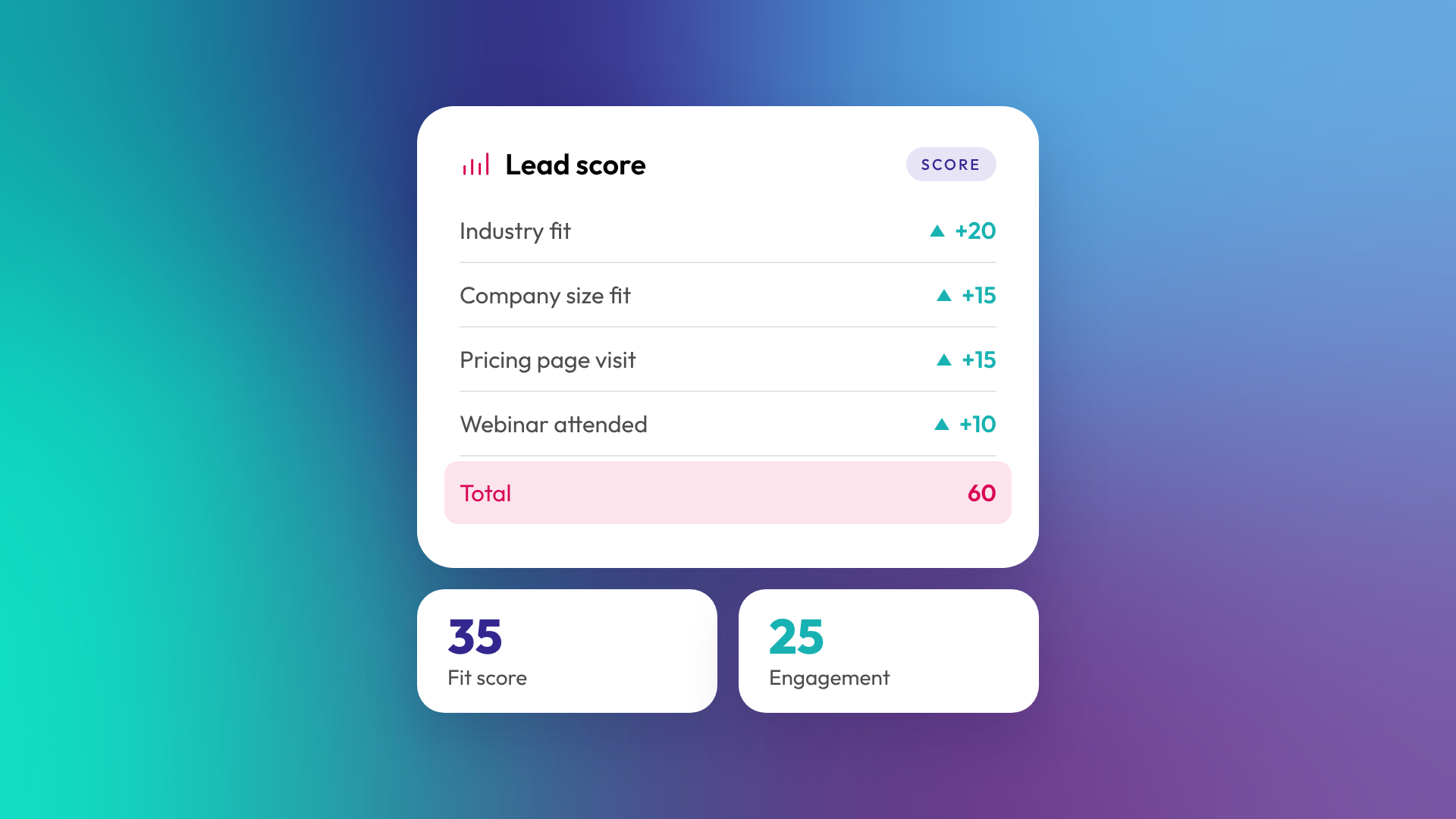
Lead scoring is a method of ranking leads with points based on how well they fit your ideal customer (fit) and how actively they're engaging with you (engagement). Higher scores tell sales who to contact first. A B2B business needs lead scoring when it has more leads than sales can follow up properly, and needs a consistent way to decide who's worth their time.
If sales can comfortably call every lead within a day, you probably don't need it yet.
How does lead scoring work?
A lead score adds or subtracts points based on rules you define. Fit rules look at who the lead is, such as industry, company size, role and location. Engagement rules look at what they've done, such as visiting pricing pages, opening emails or attending webinars. The total score, or a combination of both, indicates how sales-ready a lead is.
| Score type | What it measures | Example rules |
|---|---|---|
| Fit | How closely the lead matches your ideal customer | +20 if industry is Financial Services, +15 if 20 to 200 employees, -30 if student email |
| Engagement | How actively the lead is interacting with you | +15 for a pricing page visit, +10 for a webinar, +5 per email click |
| Combined | Both together | High fit and high engagement goes to sales first |
What's the difference between fit and engagement?
Fit tells you whether a lead is worth pursuing. Engagement tells you whether now is the right time. A perfect-fit company that hasn't engaged in a year isn't ready for a sales call, and a highly engaged student isn't going to buy. Looking at both separately is more useful than a single blended number.
How does lead scoring work in HubSpot?
HubSpot's lead scoring tool is available on Marketing Hub and Sales Hub Professional and Enterprise. It lets you build engagement, fit or combined scores for contacts (Marketing Hub) and companies (Marketing Hub or Sales Hub), and combined scores for deals (Sales Hub). Scores are stored as properties, so you can use them in segments, workflows, views and reports.
HubSpot also offers AI help. Breeze Assistant can help build scores from a prompt (in beta), and on Marketing Hub Enterprise an AI score builder can recommend criteria based on your account's conversion data.
Does a B2B business need lead scoring?
It depends on volume and sales capacity. Lead scoring earns its place when leads outnumber the time sales has to follow them up, or when marketing and sales disagree about lead quality. It adds little when lead volume is low and every enquiry gets a personal response.
Lead scoring is worth setting up when:
- Sales can't follow up every lead within a reasonable time
- Marketing and sales argue about which leads are "good"
- You have enough historical data to know what a good lead looks like
- You want to automate the MQL handoff
It's usually not worth it yet when:
- You get a handful of enquiries a week
- You don't know which industries or roles convert best
- Nobody will act on the score
How do you build a lead score that works?
Start from your closed-won deals, not from guesswork. Look at which industries, company sizes and roles became customers, and what they did before they bought. Build the score from those patterns, then test it against recent leads. If the top-scoring leads aren't the ones sales would choose, adjust the rules.
Keep it simple at first: five to ten rules is plenty. Agree the threshold for MQL with sales, and review the score every quarter as your market and content change.
What goes wrong with lead scoring?
The most common failure is a score that nobody trusts. That usually happens when it's built by marketing alone, rewards low-value actions like email opens too heavily, or never gets reviewed. Another is scores that only go up, so a lead who engaged two years ago still looks hot. Using time-based criteria, or resetting engagement scores with workflows, keeps scores current.
Common questions about lead scoring
What is a good lead score?
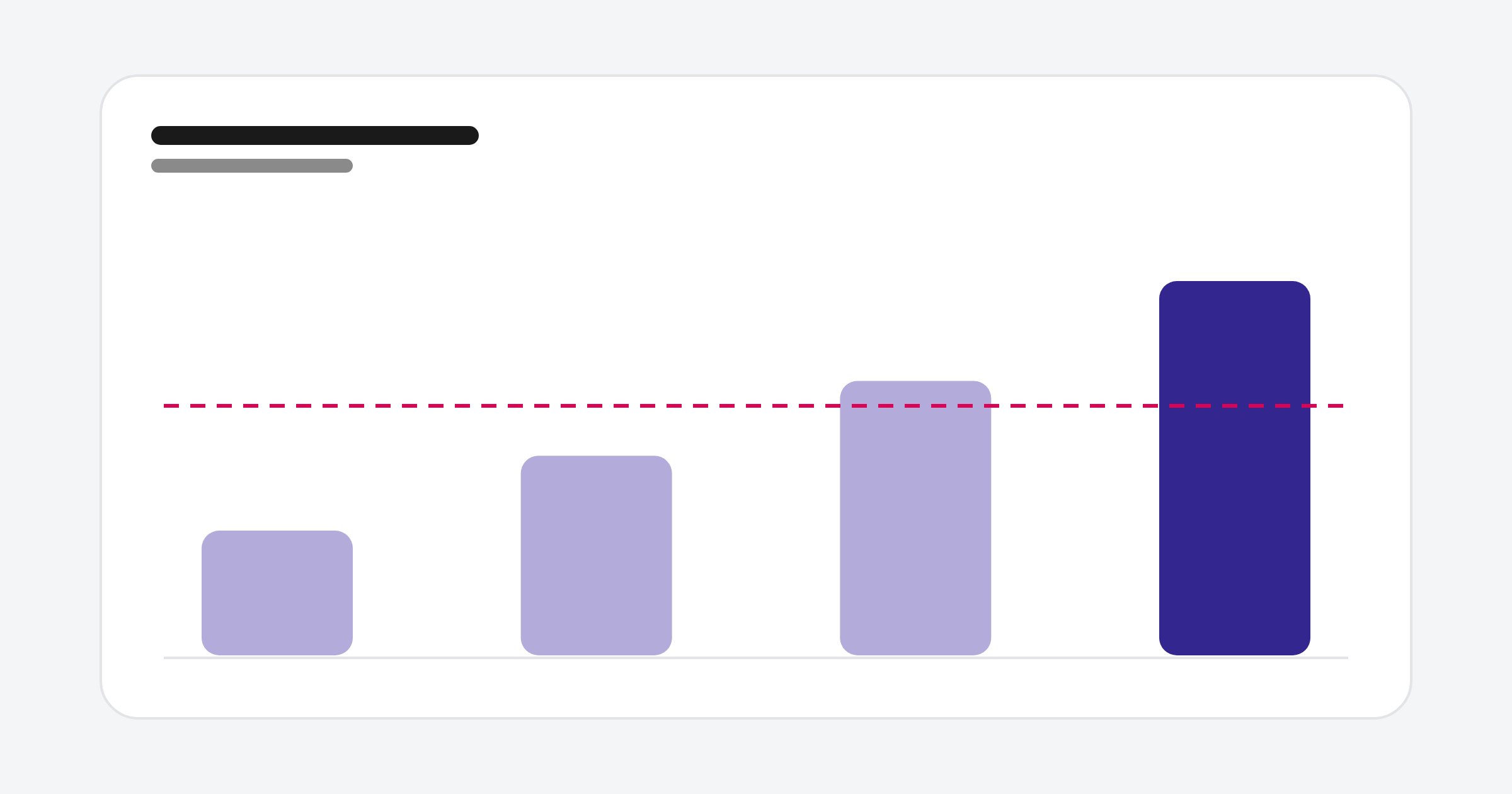
There's no universal number. A good score is one where the top-scoring leads convert noticeably better than the rest. Set thresholds from your own data.
Should email opens count towards a lead score?
Lightly, if at all. Privacy features in email apps inflate open rates, so clicks and website visits are more reliable signals.
Can lead scores decrease?
Yes. You can add negative rules (for example, for unsubscribes or competitor domains) and use time limits so old engagement stops counting.
Do I need HubSpot Professional for lead scoring?
Yes. HubSpot's lead scoring tool requires Marketing Hub or Sales Hub Professional or Enterprise.
How is lead scoring related to MQLs?
A lead score is often used to decide when a contact becomes a marketing qualified lead, usually by setting the lifecycle stage automatically when the score passes a threshold.
Where to from here
Pull your last 20 closed-won customers and list what they had in common before they bought. That list is the first draft of your fit score. If you'd like help turning it into a working model, our optimisation and support team can build and tune it with you.
