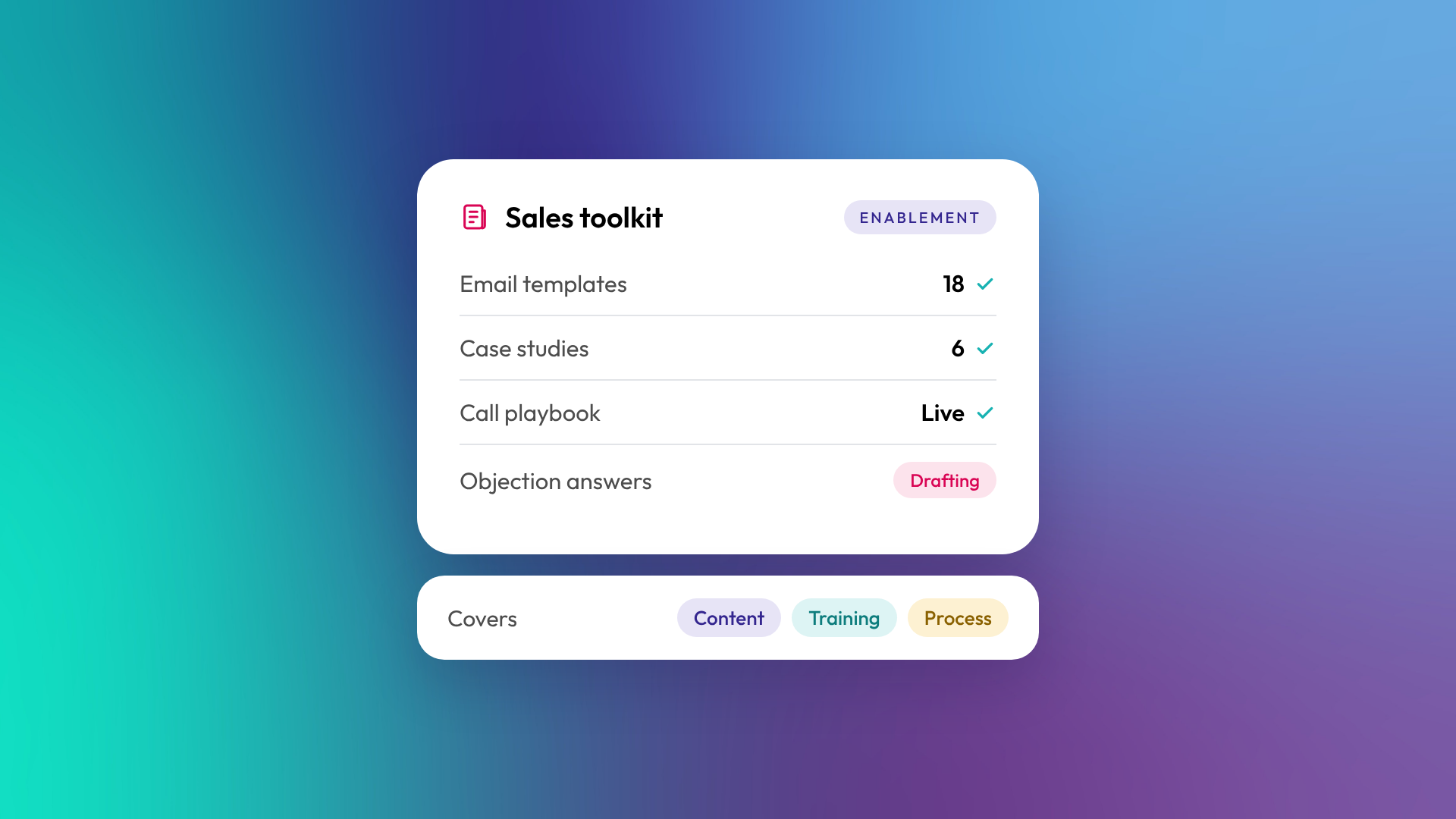
Sales enablement is the work of giving salespeople the content, training, tools and processes they need to sell effectively. It covers everything from case studies and proposal templates to CRM training, playbooks and onboarding for new reps. In a growing B2B business, sales enablement is usually less about a dedicated team and more about making sure every salesperson has what they need, in the CRM, at the moment they need it.
What does sales enablement include?
Sales enablement spans four areas. Each one removes friction from a salesperson's day so more of their time goes on selling.
| Area | What it covers | Examples |
|---|---|---|
| Content | Material reps share with buyers | Case studies, one-pagers, proposal templates, pricing guides |
| Training | Skills and product knowledge | Onboarding, product training, objection handling, CRM training |
| Tools | Systems that support the sales process | CRM, sequences, meeting links, quotes, call recording |
| Process | How the team sells | Playbooks, stage definitions, qualification frameworks, handoffs |
Who owns sales enablement?
In larger companies, sales enablement is a dedicated team. In most growing B2B businesses, it's shared: sales leadership owns the process, marketing produces the content, and whoever manages the CRM owns the tools and training. The risk with shared ownership is that nobody owns it, so it's worth naming one person responsible for keeping it current.
How does a CRM support sales enablement?
A CRM is where enablement becomes practical. Instead of content living in a shared drive nobody can find, it's attached to the right deal stage or available inside an email. Instead of a playbook in a PDF, the right questions and next steps appear on the record.
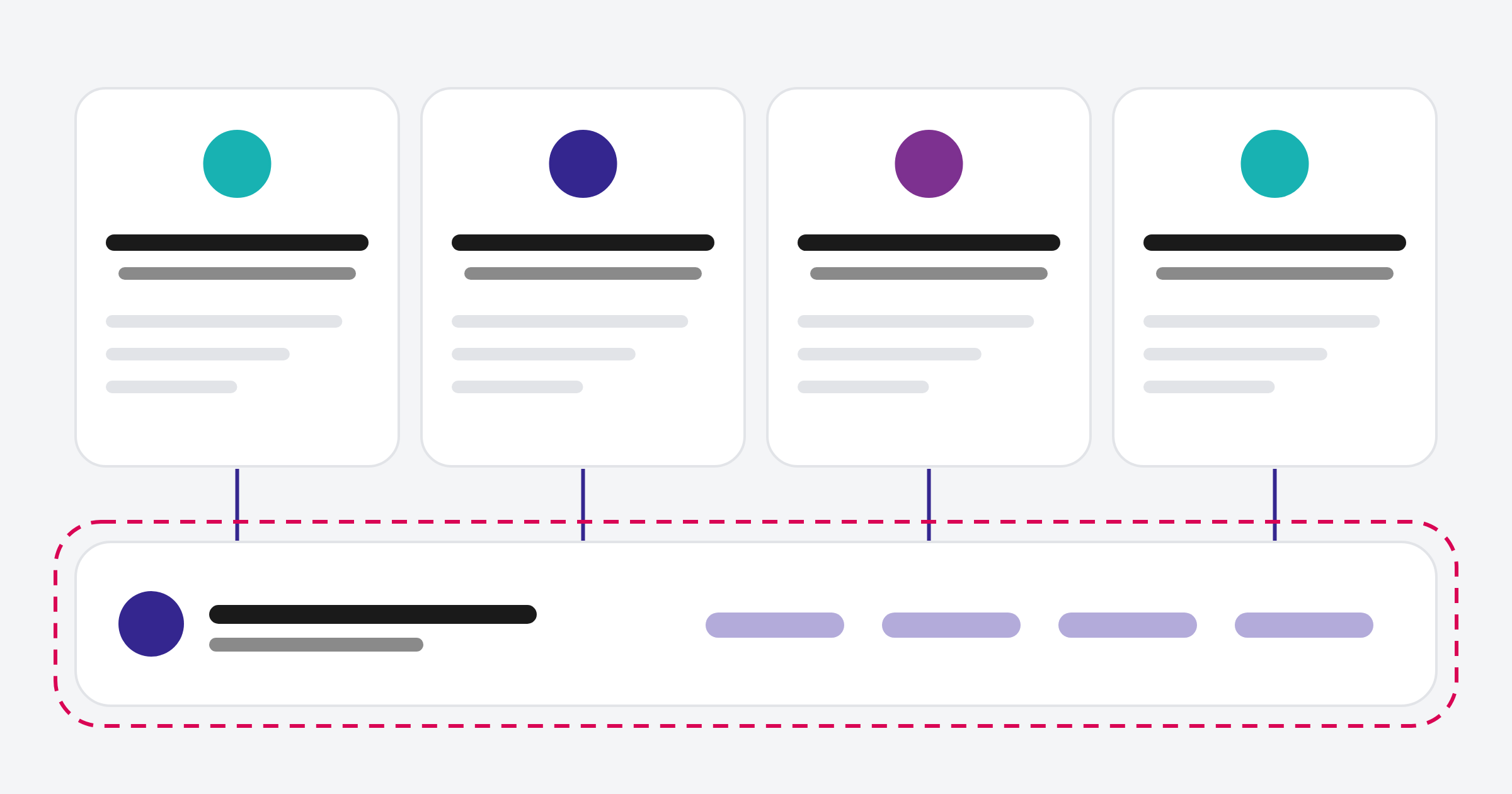
In HubSpot, sales enablement tools include:
- Templates and snippets for common emails and answers
- Documents with tracking, so reps see when a buyer opens them
- Sequences for consistent follow-up
- Playbooks that guide reps through calls and qualification
- Meeting links so buyers can book time directly
- Quotes generated from deal data
- Required properties at each stage so the process is followed
What content do B2B salespeople actually need?
Salespeople need content that answers the questions buyers ask at each stage, not content that marketing finds interesting. The most used pieces tend to be practical: case studies from similar businesses, clear pricing or scope explanations, comparison pages, and answers to common objections.
A useful exercise is asking each rep for the five questions they answer most often. If there's no good piece of content for each, that's the content plan.
How do you measure sales enablement?
Measure whether enablement changes sales outcomes, not how much content exists. Useful measures include how quickly new reps make their first sale, win rates at each stage, how often content is used in deals that close, and how consistently reps follow the agreed process. HubSpot's document and template reporting shows which assets get opened and used.
Where does sales enablement go wrong?
Most enablement fails because it's built once and never maintained. Content goes out of date, playbooks stop matching how the team sells, and new reps learn from whoever sits next to them instead. Another common failure is buying tools before agreeing the process, which leaves reps with more software and no clearer idea what to do.
Related reading: What is Breeze? HubSpot's AI explained.
Common questions about sales enablement
Is sales enablement the same as sales training?
No. Training is one part of sales enablement. Enablement also includes content, tools and process.
Does a small sales team need sales enablement?
Yes, though it looks different. A small team needs a clear process, a few strong pieces of content and a CRM set up so reps can find them. It doesn't need a dedicated enablement function.
How is sales enablement related to RevOps?
RevOps aligns systems, data and processes across marketing, sales and service. Sales enablement focuses on equipping the sales team specifically. They overlap heavily, especially around CRM tools and process.
What's a sales playbook?
A sales playbook documents how your team sells: who to target, how to qualify, what to say at each stage and how to handle common objections. In HubSpot, playbooks can sit directly on records.
How often should sales content be updated?
Review it at least twice a year, and whenever pricing, products or positioning change.
Where to from here
Ask your sales team which content they wish existed and which they never use. The two lists usually tell you exactly where to start. Our HubSpot onboarding work includes setting up templates, sequences and playbooks for sales teams.
