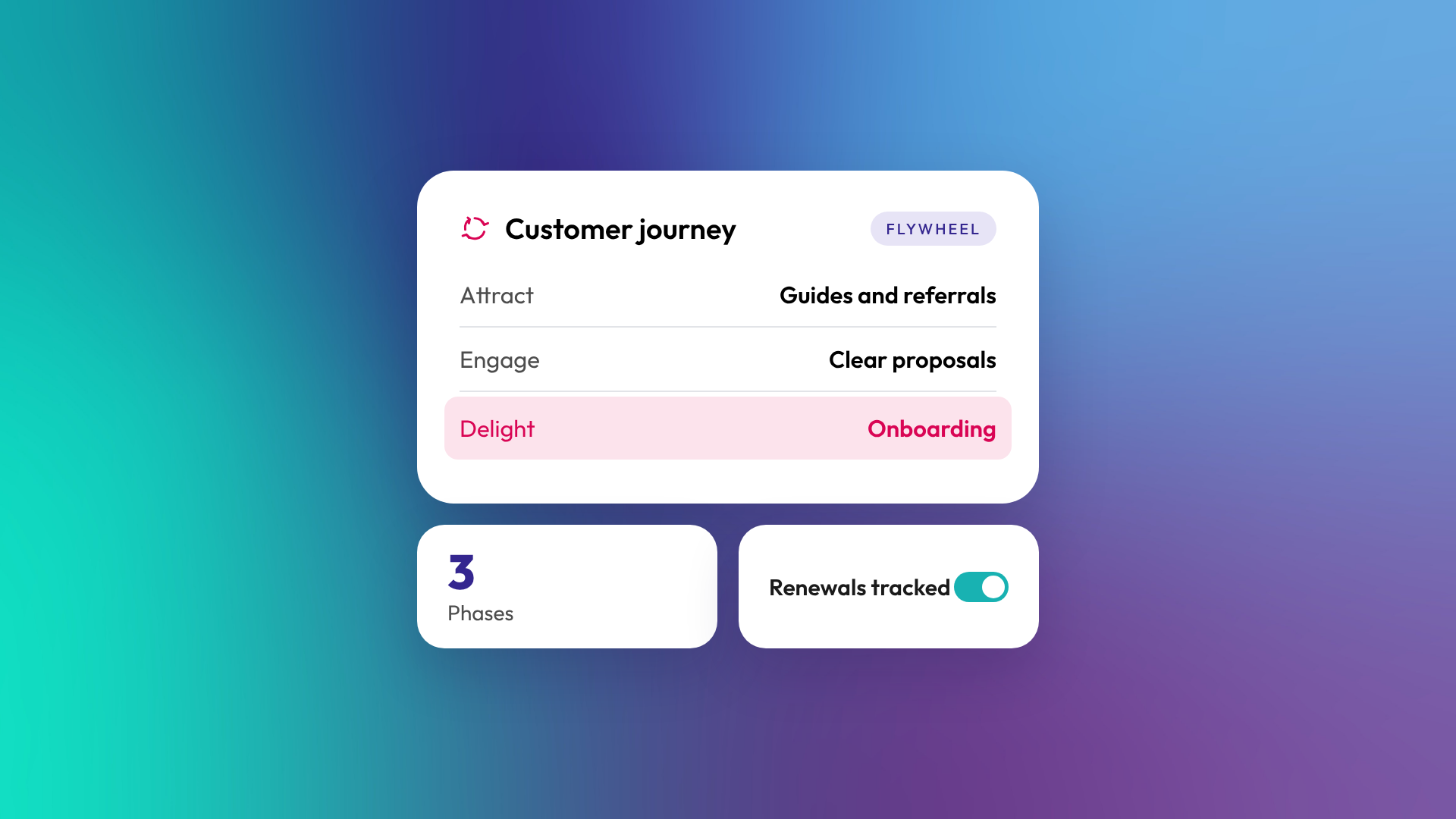
The sales funnel describes buyers moving from awareness to purchase, with the customer as the end point. The flywheel, a model HubSpot introduced in 2018, treats customers as the start of the next cycle: happy customers refer, renew and expand, which adds momentum to growth. The flywheel has three phases (attract, engage and delight) and puts as much weight on keeping customers as on winning them.
For a B2B business, the practical difference is whether your CRM and reporting stop at "closed won" or carry on through onboarding, service and renewal.
What is the sales funnel?
The sales funnel is a model of buyers narrowing from a large group of people who know about you, to a smaller group who are interested, to the few who buy. It's useful for measuring conversion between stages and spotting where prospects drop off. Its limitation is that it ends at the sale, so what happens to customers afterwards sits outside the model.
What is the HubSpot flywheel?
The flywheel is a circular model in which customers sit at the centre and every stage feeds the next. Instead of ending at purchase, the customer experience after the sale (service, onboarding, support) generates referrals, reviews, renewals and expansion that attract new buyers. HubSpot describes three phases.
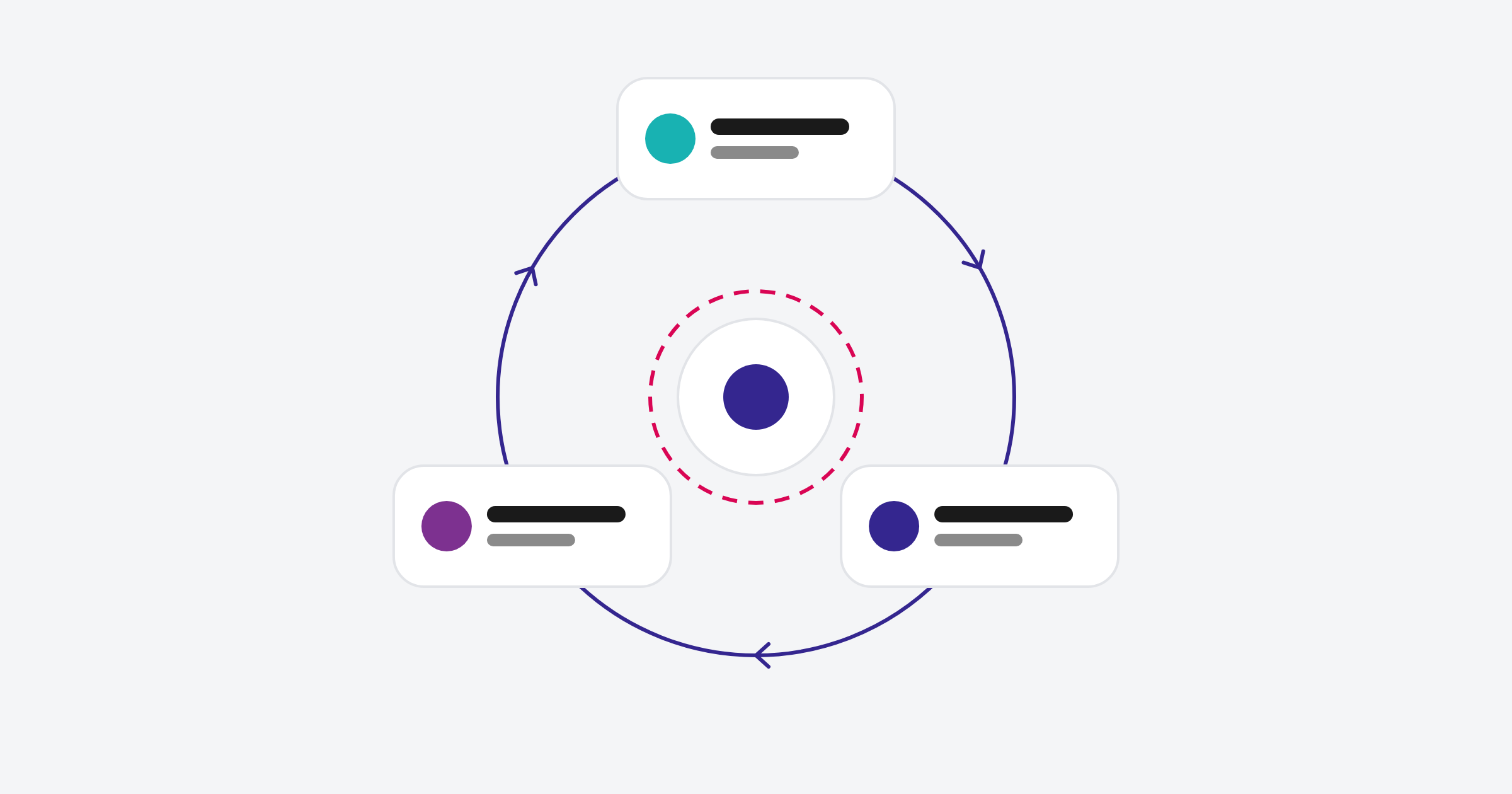
| Phase | What happens | Example activity |
|---|---|---|
| Attract | Draw in the right people with useful content and experiences | Guides, SEO and AEO content, events, referrals |
| Engage | Make it easy to buy and build relationships | Responsive sales, clear proposals, easy booking |
| Delight | Help customers succeed so they stay and recommend you | Onboarding, support, check-ins, renewals |
The idea is that reducing friction at each phase lets the flywheel spin faster, while friction (poor handoffs, bad service) slows it down.
What's the difference between a funnel and a flywheel?
The funnel is linear and ends at purchase. The flywheel is circular and treats customers as a source of growth. Both are useful, and many businesses use funnel metrics inside a flywheel mindset.
| Funnel | Flywheel | |
|---|---|---|
| Shape | Linear | Circular |
| Ends at | The sale | Doesn't end |
| Role of customers | Output | Driver of growth |
| Focus | Acquisition | Acquisition and retention |
| Key metrics | Conversion rates, pipeline | Conversion, retention, referrals, expansion |
Why does the flywheel matter for B2B businesses?
In B2B, a large share of growth often comes from existing customers: renewals, upsells, referrals and case studies. A funnel-only view tends to underinvest in that. The flywheel is a reminder that onboarding, service and account management are growth activities, not just costs.
Professional services and SaaS businesses in particular tend to win a lot of work through referrals and long relationships. Our longest client relationships are older than their HubSpot portals, which is the flywheel working as intended.
How do you apply the flywheel in HubSpot?
Apply it by making sure your CRM tracks the whole customer journey, not just the sale. That means lifecycle stages that continue past Customer, service pipelines for onboarding and support, renewal pipelines, and reports that show retention and expansion alongside new business.
Practical steps:
- Use the Evangelist lifecycle stage, or a custom equivalent, for advocates
- Track onboarding or implementation in its own pipeline
- Run renewals in a separate deal pipeline
- Collect feedback with surveys and act on it
- Report on referral-sourced deals and customer retention
Related reading: What is attribution reporting? and What is RevOps? A plain-English definition.
Common questions about the flywheel
Who created the flywheel model?
The concept of a business flywheel was popularised by Jim Collins. HubSpot adapted it for marketing, sales and service and introduced its flywheel model in 2018.
Is the funnel dead?
No. Funnel metrics like conversion rates between stages are still useful. The flywheel adds the customer experience after the sale to the picture.
What causes friction in the flywheel?
Poor handoffs between teams, slow responses, confusing pricing, weak onboarding and unresolved support issues all slow the flywheel.
How does the flywheel relate to lifecycle stages?
Lifecycle stages track where each contact or company sits in the journey. Extending them past Customer helps you track the delight phase.
Do I need Service Hub for the flywheel?
Not necessarily, but Service Hub's tickets, feedback surveys and customer portal make the delight phase much easier to manage and measure.
Where to from here
Check where your HubSpot reporting stops. If it ends at closed won, start by adding renewal and onboarding tracking. Our HubSpot onboarding work sets the CRM up for the full customer journey, from first enquiry through to renewal.
