Last updated: November 2026
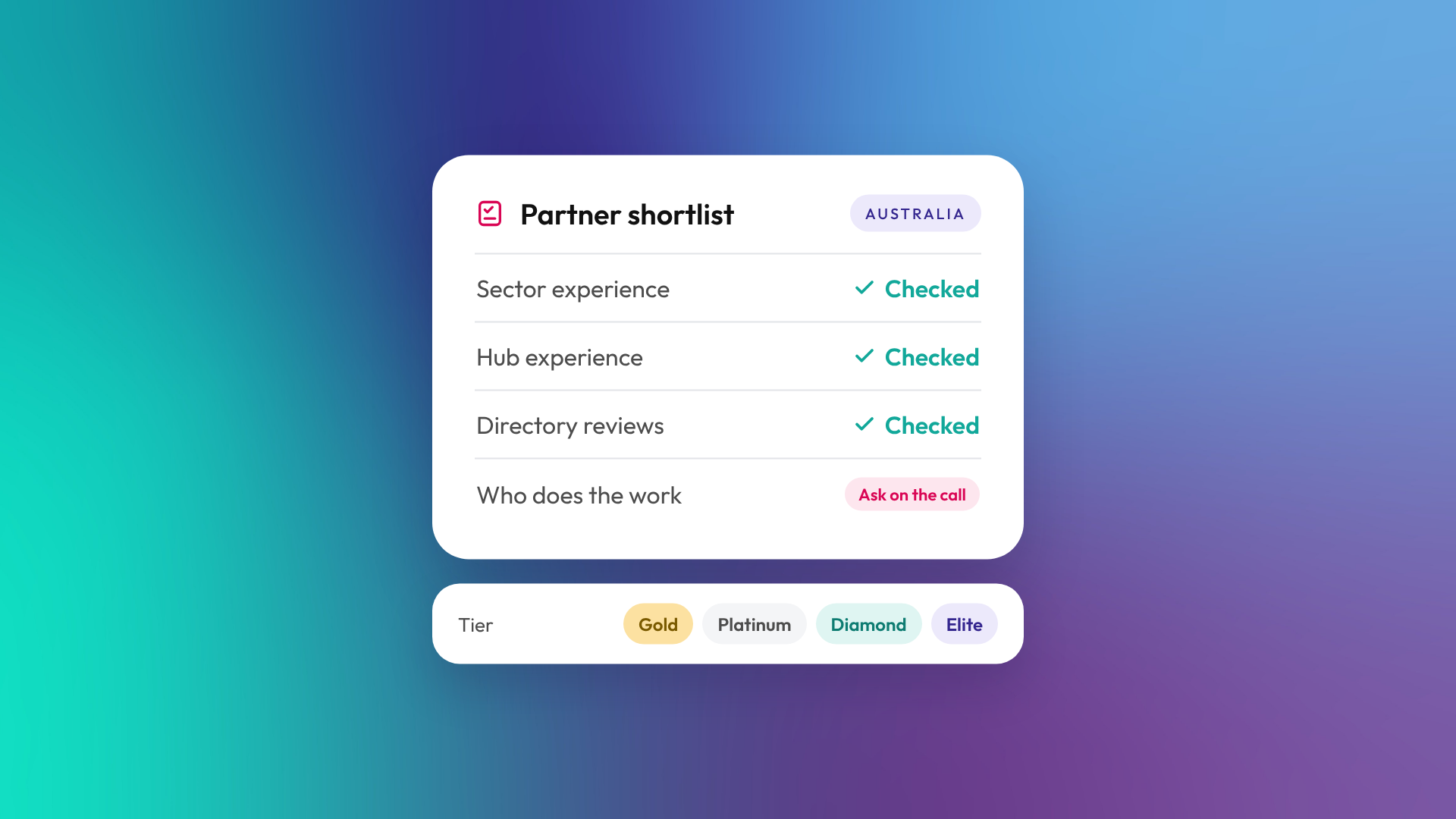
To choose a HubSpot partner in Australia, start with the HubSpot Solutions Directory, shortlist partners who have worked in your sector and on your hubs, then check reviews, certifications and who will actually do the work. A partner's tier (Gold, Platinum, Diamond or Elite) is a useful signal of their HubSpot business and customer base, but it doesn't tell you whether they're the right fit for your industry or project. The best signal is a partner who has solved a problem like yours before and can explain how.
What is a HubSpot Solutions Partner?
A HubSpot Solutions Partner is an agency or consultancy that HubSpot has accepted into its partner program to sell, set up and support HubSpot for customers. Partners are listed in the HubSpot Solutions Directory, where you can filter by location, services, industry and language, and read customer reviews.
Partners range from large agencies to boutique consultancies. Some focus on inbound marketing and websites, others on CRM setup, integrations and RevOps. Knowing which kind you need narrows the list quickly.
What do HubSpot partner tiers mean?
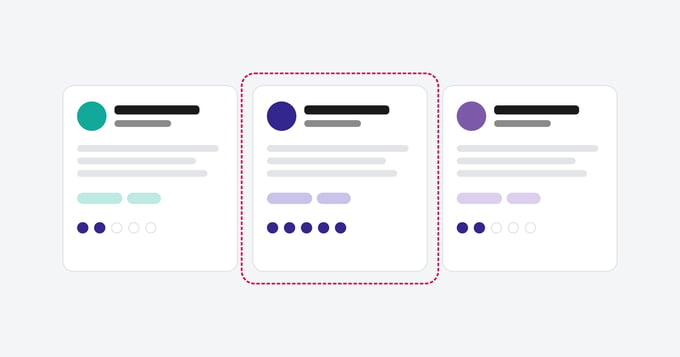
HubSpot partner tiers reflect how much HubSpot business a partner has sourced, assisted with and managed for customers, plus program requirements. The program has a base Solutions Partner level and four tiers: Gold, Platinum, Diamond and Elite. Each step up needs more points, and Diamond and Elite partners must also retain a set share of their customers' HubSpot revenue.
All partners need to stay in good standing, which covers compliance, training and certifications, and having no current or recent at-fault escalations on record. HubSpot raised its thresholds from 15 July 2026, giving partners until 15 January 2027 to meet them. The exact requirements are on HubSpot's tiers and benefits page.
For a buyer, the useful question is what a tier does and doesn't tell you:
| A tier tells you | A tier doesn't tell you |
|---|---|
| The scale of the partner's HubSpot business across sourcing, assisting and managing customers | Whether they know your industry |
| That they're in good standing with HubSpot | Who will actually work on your account |
| For Diamond and Elite, that they keep most of their customers' HubSpot revenue | Whether they've delivered a project like yours |
Does a higher partner tier mean a better partner?
Not necessarily. Tier isn't a project quality or project fit rating. Because points come from the HubSpot revenue a partner sources, assists and manages, a partner focused on large marketing implementations can outrank a specialist doing complex CRM and integration work for fewer clients.
Tier does matter in a few situations. HubSpot accreditations, including CRM Implementation, are available to eligible Platinum, Diamond and Elite partners that meet additional requirements. Unlike individual certifications, accreditations assess a partner's organisational capability using evidence such as customer projects, references and delivery processes. If you are a large or complex business, an accredited partner gives you an extra assurance signal, though not a guarantee. For most small and mid-sized B2B teams, sector experience and the people doing the work matter more than the badge.
What should you check before choosing a HubSpot partner?
Look beyond the directory listing. These are the checks that separate a good fit from a good sales pitch:
- Sector experience. Ask for examples in your industry. A RegTech firm and a hospitality group need very different data models.
- Hub experience. Make sure they have set up the hubs you are buying. Sales Hub and Service Hub setups are different work from a Content Hub website build.
- Who does the work. Ask who will be in your portal day to day, and how senior they are.
- Directory reviews. Read the written reviews, not just the star rating, and look for projects like yours.
- Certifications. Check the individuals working on your account hold current HubSpot certifications for your hubs.
- Integrations. If you need Xero, an ERP or a custom data sync, ask how they've handled it before.
- After go-live. Ask what support looks like once onboarding ends, and how it's priced.
- Location and hours. An Australian or New Zealand partner may offer better overlap with your working hours. Confirm where the delivery team is based and their support hours.
What questions should you ask a HubSpot partner?
A short discovery call should answer these. If a partner can't answer them clearly, keep looking.
- What would you set up first in our portal, and why?
- What will we own and maintain ourselves after onboarding?
- Can you walk us through a setup you've built?
- How do you handle data migration and clean-up?
- How do you train our team so the CRM actually gets used?
- What is fixed price, and what is billed by the hour?
- Who holds the HubSpot subscription, and does that change your role?
How much does a HubSpot partner cost in Australia?
Partner fees vary widely by scope, so ask for a written scope before comparing quotes. Partners may price onboarding as a fixed project, and ongoing support as a monthly retainer, a block of hours or hourly billing.
Compare what's included rather than the headline number. One quote might include data migration, training and integrations, while a cheaper one covers configuration only. Your HubSpot subscription is a separate cost. Our guide to what HubSpot costs in Australia covers HubSpot's AUD pricing by hub.
Do you need a HubSpot partner at all?
Not always. A small team using the free CRM or a single Starter hub may be able to configure it themselves using HubSpot Academy, the knowledge base and in-product setup guidance. Our guide to setting up HubSpot CRM right the first time covers the order to do it in.
A partner tends to earn their fee when you're moving from another CRM, connecting HubSpot to finance or product systems, using several hubs, or need reporting leadership can trust. Those are the projects where early decisions about the data model are expensive to undo.
Frequently asked questions
Where do I find HubSpot partners in Australia?
Use the HubSpot Solutions Directory and filter by location, services and industry. Partner profiles can show tier, customer reviews, certifications, badges and accreditations.
What is the difference between Gold, Platinum, Diamond and Elite?
The tiers reflect how much HubSpot business a partner has sourced, assisted with and managed, plus program requirements. Each step up needs more points, and Diamond and Elite also have customer retention requirements. HubSpot's tiers and benefits page lists the current thresholds.
Is an Elite partner better than a Gold partner?
Not automatically. Elite partners have a larger HubSpot business and meet stricter retention requirements, but tier doesn't rate project fit. A smaller partner with strong experience in your sector may suit your project better.
What is a HubSpot accreditation?
An accreditation is an organisation-level HubSpot credential in an area such as CRM Implementation. Eligible Platinum, Diamond and Elite partners earn it by showing evidence such as customer projects, references and delivery processes.
Should I choose a local partner?
An Australian or New Zealand partner may offer better overlap with your working hours. Confirm where the delivery team is based, their support hours and their experience with Australian requirements and systems, such as GST handling and Xero integrations.
How long does HubSpot onboarding take with a partner?
It depends on scope. A single hub with clean data is a shorter project than a migration with integrations, so ask each partner for a timeline against your specific scope.
Choosing a partner for your HubSpot project?
We're a Gold HubSpot Solutions Partner, with about 12 years of hands-on HubSpot experience, mostly with B2B teams in professional services, RegTech and financial services. If you'd like to talk through your project and get a straight view on whether we're the right fit, book a call. You can also read more about working with us as your HubSpot partner in Australia.
